Ear Crystals or a Neck Problem? Why Doctors Keep Missing the Real Cause of Dizziness

Thousands of Australians are being told they have 'ear crystals' and sent home with the Epley manoeuvre. They keep coming back dizzy.

August 2026 – There's a blind spot in how dizziness gets treated in Australia. GPs and ENT specialists look at the inner ear. Balance clinics look at the balance system. The bit in between barely gets a glance.

The culprit? The top of your neck. But they keep blaming your ears.

If you've had the Epley manoeuvre more than once and you're still dizzy, read this slowly.

The Epley manoeuvre works on one thing: loose crystals in your inner ear. When those crystals are the problem, it usually works quickly.

So when you've had it done two, three, four times and the room still spins, the obvious question is: what if the crystals were never the problem?

Here's what rarely gets checked. The top two bones of your neck sit right under your skull. Wrapped around them are small, deep muscles. Running through them are the arteries that feed the back of your brain and the nerves that tell your brain which way is up.

When those deep muscles lock up, they press on both.

Your brain gets less blood and mixed-up position signals. You feel dizzy. Off-balance. Sick. Foggy.

Same symptoms as ear crystals. Completely different cause.

And nobody checks it, because you walked in saying 'dizzy', and 'dizzy' means 'ears'.

Your Neck Causes the Exact Same Symptoms as 'Ear Crystals'

Most people don't realise their neck has anything to do with balance.

It does. Your neck holds seven bones, and the top two, C1 and C2, carry your head. Around them run the vertebral arteries, part of your brain's blood supply. Through them run the nerves that feed your brain constant updates on where your head is in space.

Now think about how your neck spends its day. Bent over a phone. Hunched at a desk. Propped on the steering wheel.

Hours of that, and the neck muscles tighten to hold your head up. Tight muscles squeeze their own blood supply, like standing on a garden hose. Starved of oxygen, the deep muscles that hold your top vertebrae in place weaken and shut down. They stop firing.

Without them, the top of your neck can't hold its position. It sits compressed. All day.

Cervical anatomy

That compression sets off a chain.

First, the squeezed arteries cut blood flow to the back of your brain and the balance centre next to your inner ear. You feel light-headed. The room tilts when you stand up.

Second, the irritated nerves send your brain the wrong position data. Your eyes say one thing, your neck says another. You feel seasick sitting still. Sensitive to light. Like you're swaying.

Third, your brain panics at the mismatch. Heart racing. Chest tight. A low hum of anxiety you can't explain.

Put those three together and you have a textbook 'ear crystals' presentation.

So the GP does the Epley. It doesn't work. They do it again. Still dizzy.

They never check the neck, because the symptoms look like they're coming from somewhere else.

Why Doctors Get It Wrong

Consultation

This pattern isn't unusual in Australia. It's the system working as designed.

You see a GP for dizziness. Six to twenty minutes. They check your ears, do the Epley, and refer you on if it doesn't hold.

The ENT looks at the inner ear. The balance clinic looks at the balance system. If anxiety has crept in, someone mentions a psychologist.

Each one looks at their own patch. Nobody's job is the top of your neck.

And every referral is another wait. Another gap fee. Another afternoon off work.

Meanwhile, the neck compression gets worse.

Why Standard Treatments Don't Work

Clinical examination

Even when someone suspects the neck, the usual options fall short.

  • The Epley manoeuvre can't fix what isn't an inner ear problem. It moves crystals that were never out of place.
  • Vestibular exercises retrain your balance system. They can't release deep muscles locked around C1 and C2.
  • Anti-dizziness tablets dull the spinning for a few hours. They don't touch the compression causing it.
  • Over-the-counter painkillers numb the ache at the base of your skull. The muscles underneath stay tight.
  • Remedial massage feels good for a day or two. It works on the big surface muscles. The small deep ones that hold your top vertebrae stay dormant.

Physio can help, and for many people it does. But Medicare covers five subsidised allied health visits a year, total, across physio, chiro, osteo and the rest. After that it's $90 to $150 a session out of pocket. And you're back to waiting for the next appointment to feel human again.

Chiro is a personal call. Plenty of Australians have had a good experience. Plenty of others will tell you about the money they wasted.

Specialist referral means public waiting lists that run into next year, or private fees that run into the thousands.

This is why so many people stay dizzy for months, sometimes years. They're cycling through treatments aimed at the wrong place.

The Four-Part Routine That Addresses the Right Place

Four-part routine

[NOMBRE PENDIENTE] spent 17 years as a remedial massage therapist on the Sunshine Coast watching the same necks come back week after week.

I could ease the tension. I couldn't fix the instability underneath it. That was the part that ate at me.

[ATRIBUCIÓN PENDIENTE — ver aviso en el editor]

He spent two years with movement therapists and pain rehab researchers on one question: how do you wake up deep neck muscles that have shut down?

The answer wasn't one thing. It was four things, done together, in the right order.

1

Electrical Muscle Stimulation (EMS)

Gentle pulses sent into the deep neck muscles that massage and stretching can't reach. The muscles contract on their own. For most people, that's the first time those muscles have fired properly in months. This is what starts to take the pressure off the arteries and nerves at the top of your neck.

2

Deep Heat

Warmth that reaches below the surface, helping blood vessels open. Fresh, oxygen-rich blood gets into tissue that's been starved. When blood flows freely again, the foggy, off-balance feeling starts to ease.

3

Targeted Massage

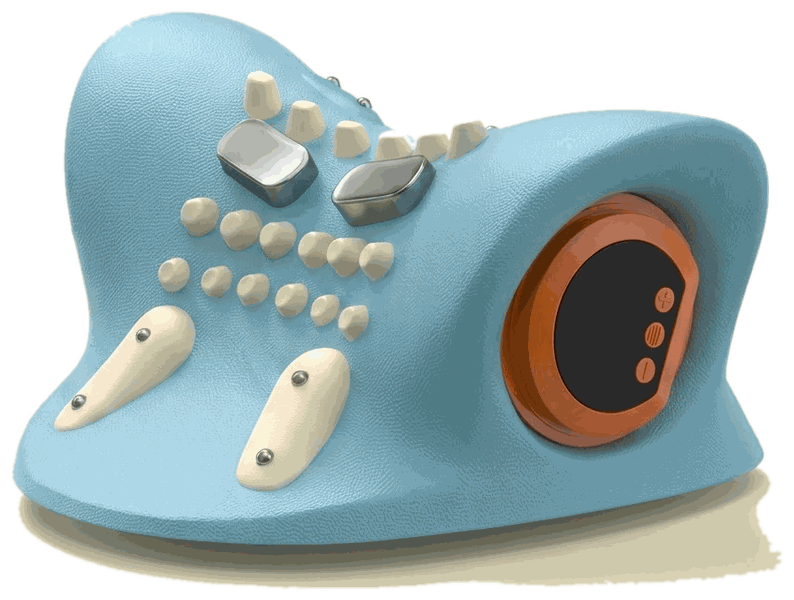
Massage nodes sitting on the exact trigger points where compression forms. Knots you didn't know you had start releasing, and the nerves stop sending mixed signals.

4

Cervical Traction at 26°

This is the key. At exactly 26° of cervical extension, your vertebrae get space — designed for gentle decompression. Enough room for squeezed arteries and trapped nerves to settle. No cracking. No sudden force.

Together, these four don't mask the dizziness. They work on the compression that the Epley was never designed to touch.

But How Can the Same Four-Part Routine Be Done at Home?

Mendable Cradle

Here's the problem he ran into.

The routine worked. But it only worked if people did it every day, and nobody can see a therapist every day. Not with five Medicare visits a year. Not with gap fees every fortnight.

So he and the Mendable team spent two years and dozens of prototypes putting all four parts into one device you lie on at home.

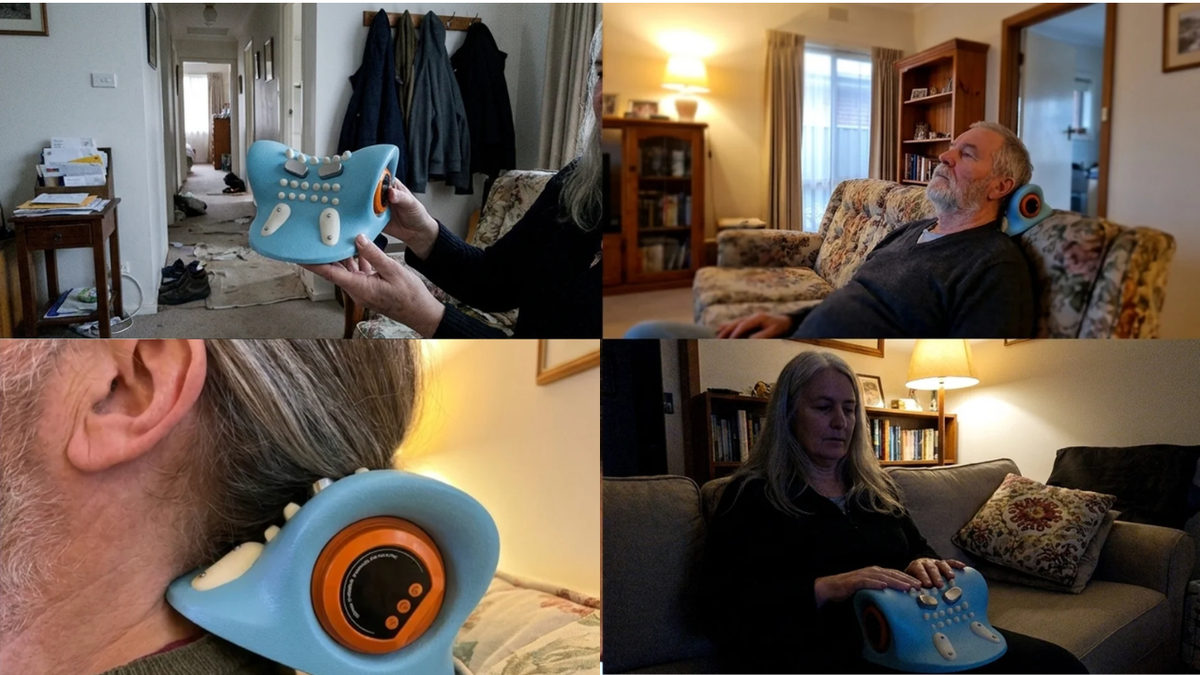
The Mendable Cradle holds your neck at 26°, runs the EMS, the heat and the massage nodes, for 15 minutes. Three intensity levels. Turn it on, lie down, done.

It's sold direct through Mendable's Australian website only. Not on Amazon, not in stores.

From Endless Appointments to Your Living Room

The Mendable Cradle puts the four-part routine into one unit. You lie on it for 15 minutes a day.

Mendable asked 487 Australians with chronic neck pain of six months or more to use it daily for 30 days.

89%

reported significant improvement — 3 or more points on a 10-point pain scale

84%

had more range of motion in the neck

79%

stopped reaching for daily pain relief

92%

reported better sleep

The survey measured neck pain, movement, medication and sleep. It did not measure dizziness. What it shows is that the deep compression at the top of the neck, the thing this article is about, does respond to a daily routine done at home.

Real People, Real Relief

Customer photos

Sarah P., Brisbane QLD — works at a screen ten hours a day.

“The tension headaches that came with it had become a daily thing. After about two weeks of using the Cradle each evening, they just disappeared. I went a fortnight without taking a single Panadol before I realised what had changed.”

Sarah P. · Brisbane, QLD★★★★★

Margaret W., Toowoomba QLD — years of compression at the top of her neck from computer work.

“The crunchy sound I usually hear turning my head is gone. I can actually check the blind spot reversing the car without turning my whole torso.”

Margaret W. · Toowoomba, QLD★★★★★

Hank S., Bendigo VIC — ongoing cervical issues for years.

“Been using this twice per day for three weeks now and my pain level has dropped dramatically. I was 5 to 6 daily, now 2 to 3.”

Hank S. · Bendigo, VIC★★★★★

Why This Works When Everything Else Failed

Using the Cradle

The difference is simple: depth and completeness.

The Epley manoeuvre moves crystals. It does nothing for squeezed arteries and irritated nerves in your neck.

Tablets mask the spinning for a few hours. Massage reaches the surface muscles. Stretching doesn't wake up deep muscles that have shut down.

The Cradle's four-part routine works at every level:

  • The EMS wakes the deep muscles that have gone dormant, so the top of your neck can hold its position again.
  • The heat opens the blood vessels, so more blood reaches the back of your brain.
  • The massage releases the trigger points that have been sending your nervous system false alarms.
  • The traction at 26° gives your vertebrae space, taking pressure off the arteries and nerves.

Together, they don't hide the symptoms. They work on the compression itself.

What It's Probably Costing You Now

Living with dizziness

Think about what this has already cost you.

  • Another GP visit. Another gap fee. Another 'let's try the Epley one more time'.
  • A referral to the ENT. A wait. Every inner ear test you can imagine, all coming back normal.
  • Five Medicare-subsidised allied health visits a year. Gone by autumn. Then $90 to $150 a session out of your own pocket.
  • Days you didn't trust yourself behind the wheel. Asking the kids for a lift.
  • Mornings you called in sick because you couldn't stand up without holding onto the bench.
  • Events you skipped. A wedding. The grandkids' sports day.
  • That low hum of worry all day. Always scanning for the nearest place to sit down.

Most people spend more than a thousand dollars a year chasing a diagnosis that was aimed at the wrong place.

The Mendable Cradle is one payment. You use it at home, whenever you need it. No appointments. No waiting rooms. No Medicare cap to burn through.

What Happens If You Don't Act

The medication cycle

Here's the thing about deep neck compression. It doesn't sort itself out. Muscles that have shut down don't switch back on because you waited.

The ache at the base of your skull can spread. Into headaches. Into the shoulders. Down the arm.

And the care pathway keeps doing what it does. Another Epley. Another referral. Another six-month wait to be told everything looks normal.

The sooner those deep muscles are working again, the less ground there is to make up.

The 60-Day Money-Back Promise

Here's what makes this easy.

Here's what makes this easy.

Use the Mendable Cradle for 60 full days. If it isn't working for you, email info@getmendable.com for a full refund.

You don't need to send the device back. Keep it.

This is in addition to your rights under Australian Consumer Law.

When dizziness needs a doctor, not an article

Dizziness alongside any of the following needs urgent medical attention: sudden severe headache, slurred speech, weakness or numbness on one side, double vision, trouble walking, chest pain, or fainting.

Your Two Choices

A fork in the path

Choice 1

Keep taking the tablets. Keep seeing specialists who look at everything except the top of your neck. Keep hoping the 'ear crystals' will settle this time.

(They won't, if they were never the problem.)

Choice 2

Work on the compression itself, with the same four-part routine, in 15 minutes a day on your couch.

No waiting lists. No gap fees.

Mendable Cradle

The Mendable Cradle is sold direct through Mendable's Australian website only.

Click below to see availability and today's bonuses.

Check Availability →
✓ 60-Day Money-Back✓ Free AU Shipping✓ 2-Year Warranty

This page contains editorial coverage of a wellness product available for purchase. The Mendable Cradle is a wellness and comfort device, not a medical device, and is not intended to diagnose, treat, cure or prevent any medical condition.

Dizziness has many causes, some of them serious. This article describes one possible contributing factor and is not a diagnosis. Always consult your GP or a qualified healthcare practitioner about dizziness, and do not stop or change any prescribed treatment without speaking to them first.

Not suitable during pregnancy, or for anyone with a pacemaker or other implanted medical device, or with recent neck surgery or trauma.

User-reported results come from a customer survey measuring neck pain, mobility, medication use and sleep. The survey did not measure dizziness. Individual results will vary.