
Orthopaedic Surgeon: Most Shoulder Pain After 45 Has Nothing to Do With a Torn Rotator Cuff
Why thousands of Australians over 45 keep getting treated for the wrong cause — and the 3-step, 12-minute approach that's finally giving people their shoulder back, without surgery.

If you've been fighting shoulder pain for more than six months — physio, cortisone, Voltaren, the lot — and you still can't sleep on that side or lift a cup from the top shelf without wincing, I want you to read this before you book the surgery.
The treatment you've been receiving may be aimed at the wrong cause entirely.
The real reason your shoulder treatments keep failing
I've spent 23 years repairing shoulders. Over 2,500 rotator cuff operations. Not just athletes — everyday Australians in their 50s, 60s and 70s with the kind of chronic, limiting pain that creeps in from years of use, then suddenly runs your life.
And the most consistent thing I see isn't on the MRI. The scan shows a tear, sure. But here's what 30 years of imaging studies have quietly confirmed: the degree of tearing on a scan does not reliably predict how much pain a person is in. Plenty of people have a 'torn' rotator cuff on film and no pain at all.
So if the tear isn't driving the pain — what is?
The blood-flow connection most doctors miss
Think of your shoulder like a door hinge. When you're young, it moves smooth and silent — because it's constantly bathed in nutrient-rich blood, like a hinge that's always oiled.
The rotator cuff has one cruel design flaw: it has the worst blood supply of almost any tissue in the body. And after 45, that supply drops by up to 70%. The vessels narrow. The tissue starts to starve.
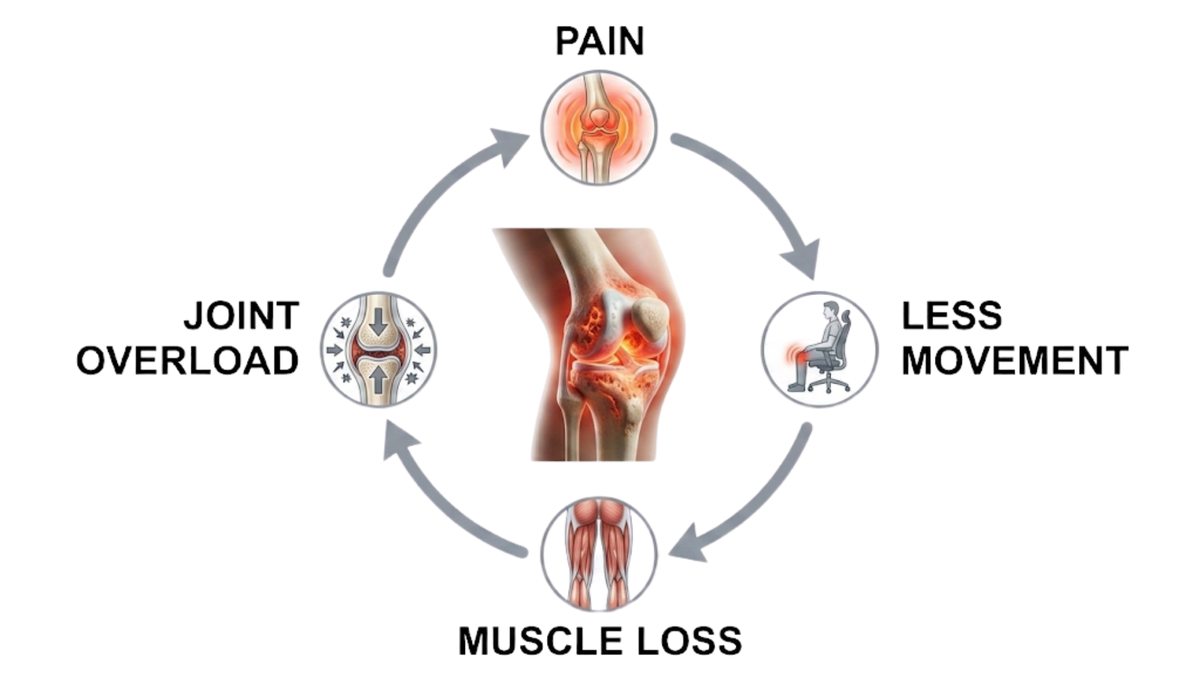
Oxygen-starved tissue can't heal. And here's the trap: when it hurts, you move it less. When you move it less, even less blood reaches it. The stiffness sets in. The pain gets worse. And the cycle feeds itself.
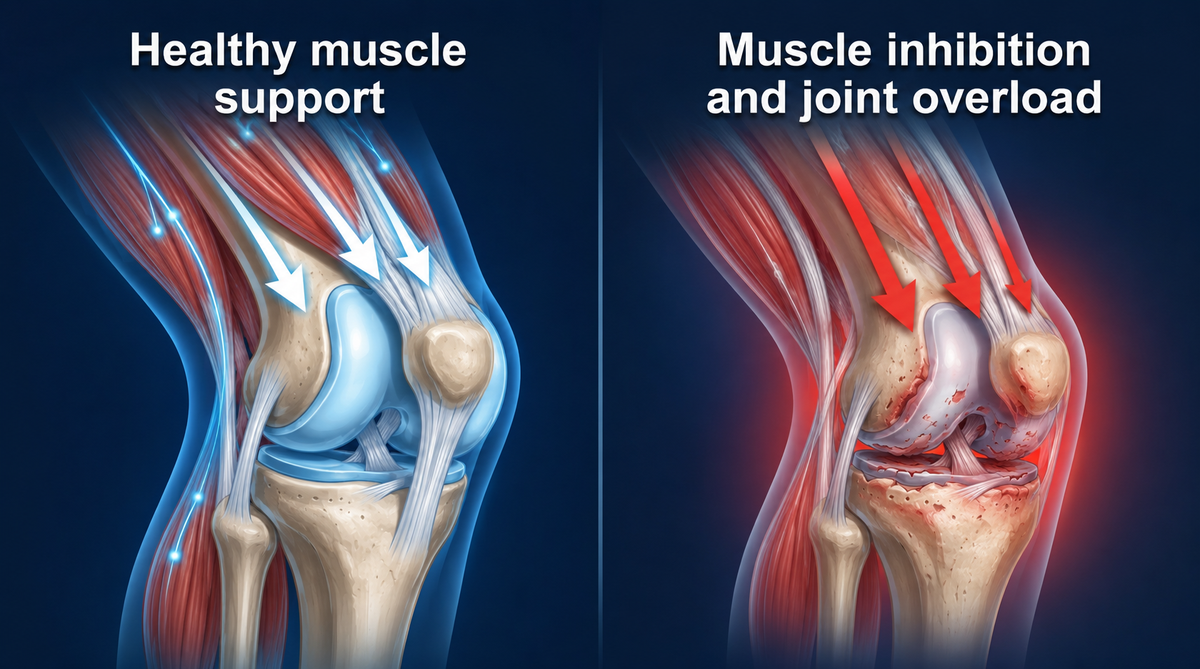
This is the mechanism behind most chronic shoulder pain after 45. And it's rarely the thing being treated.
Every cortisone injection interrupts the inflammation. It does nothing for the starvation underneath. The shot works for six weeks. Then four. The diminishing returns aren't a coincidence — the real driver keeps progressing while the inflammation is being masked. Physio loosens it for two days. Voltaren takes the edge off until your stomach can't handle it. And surgery cuts away the 'damage' without addressing why the tissue broke down in the first place.
That's the opening for a genuinely different approach.
The 3-method shoulder revival
To actually relieve chronic rotator cuff pain, you have to do three things at the same time — feed the tissue, flush it, and reset it. Miss any one of them and you're only half-addressing the problem.
Open the circulation
Flush the joint
Reset the tissue
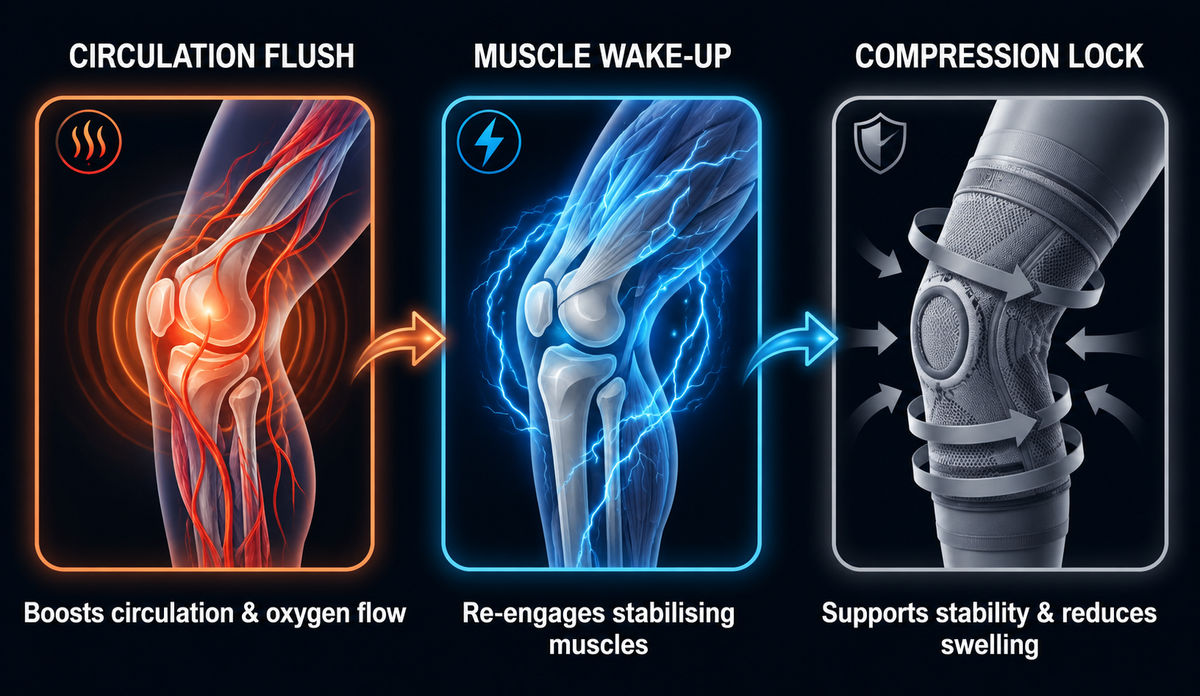
Each of these three is well-established in physiotherapy and rehabilitation medicine on its own. What hadn't existed was a practical home device that delivered all three at once, in a single daily session.
What the research actually shows
The role of thermotherapy in improving tissue perfusion and reducing joint inflammation is well documented in musculoskeletal care. Compression therapy is a recognised tool for supporting circulation and managing swelling across orthopaedic rehabilitation. And therapeutic vibration is an established approach for easing muscle tension and supporting mobility.
The evidence for each mechanism has been there for years. What changed is the delivery — all three, together, at home, in 12 minutes.
What Australians are experiencing
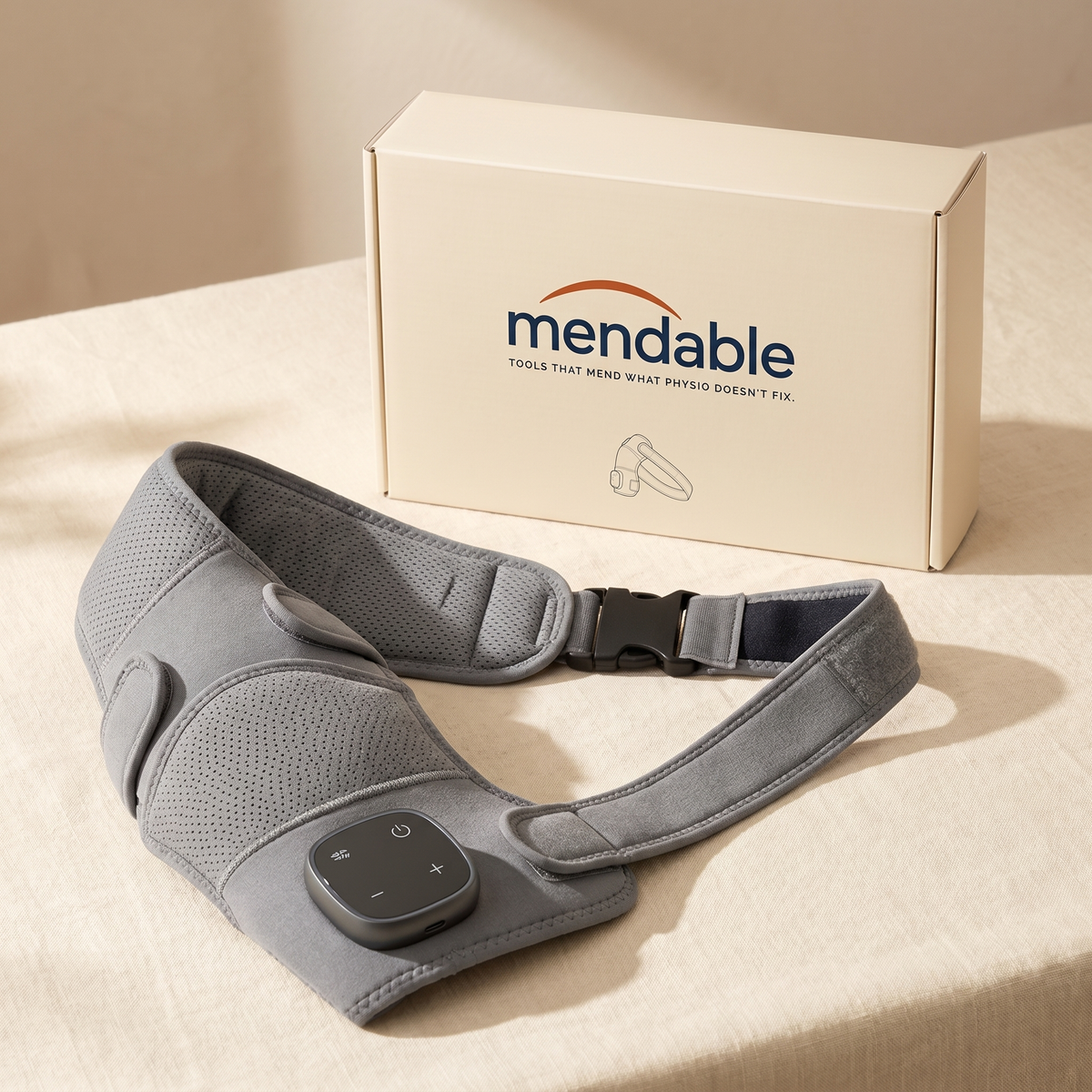
It's a wrap that straps onto the shoulder. One control unit, one button. It runs all three therapies at once for exactly 12 minutes, then shuts off. You do it once a day, in your own lounge room, while you have a cup of tea.
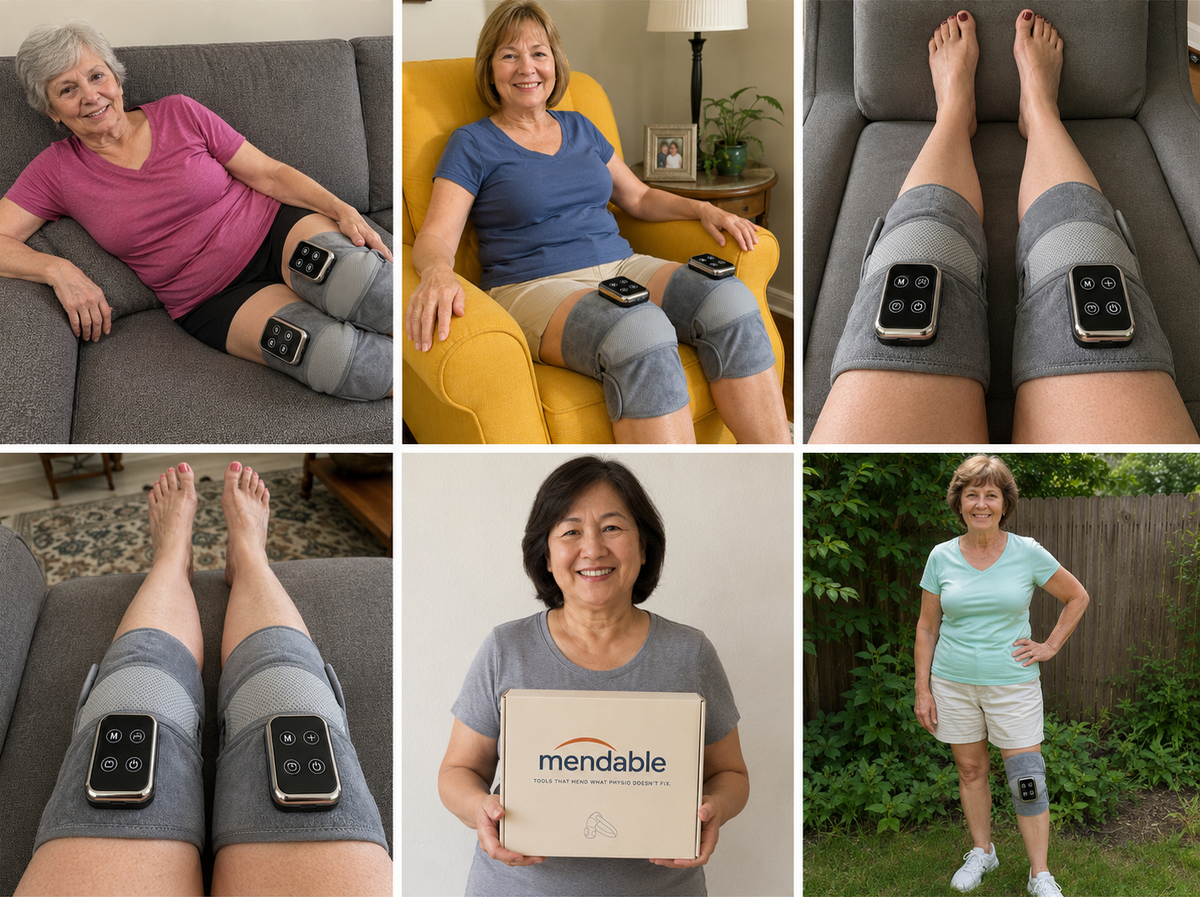
I'm a 54-year-old ICU nurse in Perth. Seventeen years of lifting patients destroyed both shoulders. Physio left me crying in the car. Cortisone wore off in three weeks. My surgeon had me booked. I tried this as a last resort — five days in I reached the top shelf at the nurses' station without the stabbing. I cancelled both operations.
The 4 AM stabbing that woke me every night has stopped. Two weeks in, I could sleep on that side again. I wish I'd found it before I spent a fortune on cortisone.
Couldn't lift my arm to brush my own hair. Twelve minutes a day. Three weeks later I was throwing a ball with my grandson again. I wish I'd found this sooner.
Real customer reviews, used with permission. Individual results vary. Customer photos shown are representative; actual customer images may differ.
Comparing the options
| Approach | Typical cost (AU) | Lasting? | Key limitation |
|---|---|---|---|
| ✕Cortisone injections | $300–$600+ per round | No — cycles, repeat | Masks inflammation; does nothing for the starved tissue underneath |
| ✕Rotator cuff surgery | $8,000–$20,000+ | Uncertain | Months of recovery; doesn't address why the tissue broke down |
| ✕Ongoing physio | $2,000–$5,000 / yr | With strict adherence | Hard to sustain long-term; relief often fades between sessions |
| ✓Mendable Shoulder | From $76.33 each | Builds over time | None of the above |
AU cost ranges are based on publicly available industry information and are illustrative only. Actual costs vary by provider, location and individual circumstances. Always consult your GP or qualified health professional before making treatment decisions.
I don't recommend products unless I believe in the underlying mechanism. Mendable Shoulder is the first practical home device I've seen that delivers all three phases — heat, compression and vibration — in one 12-minute daily session. For people stuck in the injection cycle without lasting improvement, it directly addresses what the injections leave untreated.
Results vary. Some shoulders genuinely need surgery, and no device changes that. But if you've been following the standard path — injections, rest, more injections — for a year or more without lasting change, that's important information. It suggests the standard path isn't addressing your underlying driver.
Use it daily for the first 30 days before drawing a conclusion. The tissue repair from restored blood flow takes time to accumulate.
The choice in front of you
More injections. More anti-inflammatories. Temporary relief, while the blood-starved tissue driving your pain keeps degrading quietly in the background.
Twelve minutes a day. All three therapies together — feeding, flushing and resetting the tissue. The approach that targets what the injection cycle has been leaving untreated.
Use Mendable Shoulder daily for 90 days. If your shoulder isn't sleeping better, moving better and reaching better — every cent comes back. No forms. No store credit. No friction.
If you've been told surgery is the next step — and you haven't booked it yet — Mendable Shoulder is what I'd ask you to try first. It's the option that goes before the operating room, while the tissue still has a chance to repair itself.
Dr. James O'Connell is an orthopaedic surgeon based in Sydney with 23 years of clinical experience and over 2,500 rotator cuff procedures.