Advertorial
5 Signs Your Tinnitus Is Actually a Neck Problem And How To Reverse It
You were diagnosed with tinnitus.
The hearing test came back normal. Your ears look fine. But the ringing never stops.
So they told you to try sound therapy. White noise machines. Cognitive behavioural therapy. “Learn to live with it.”
But here’s what nobody told you:
Most people diagnosed with tinnitus have never had the top of their neck examined. Not once.
Your auditory system isn’t broken.
Something is compressing the nerves and blood flow to your inner ear.

Sign #1: Pressing Behind Your Ear Changes the Volume
Most tinnitus patients assume their ringing is fixed. Constant. Unchanging. But yours isn’t. When you push on certain spots behind your ear, the volume shifts. Sometimes louder. Sometimes the pitch changes. Sometimes one side responds more than the other.
You probably never mentioned this to your doctor because you thought it was just a weird quirk. But that “quirk” is the answer.
Tinnitus from hearing damage doesn’t respond to touch. The hair cells in your cochlea are either damaged or they’re not. Pressing on your neck can’t change that. But somatic tinnitus, tinnitus driven by tight muscles and compressed blood vessels, is different. It’s mechanical. When you press behind your ear, you’re pushing on the exact muscles that are already strangling the nerves and blood flow to your inner ear. The muscles respond. The compression increases for a moment. And the ringing changes.
Your audiologist ran a hearing test and found nothing wrong. Because they were testing your ears. They never checked whether your symptoms were coming from your neck. In their training, tinnitus is an ear problem. Not a muscle problem. So when you mentioned that touching your neck changes the sound, it got filed as irrelevant. They missed the only clue that mattered.
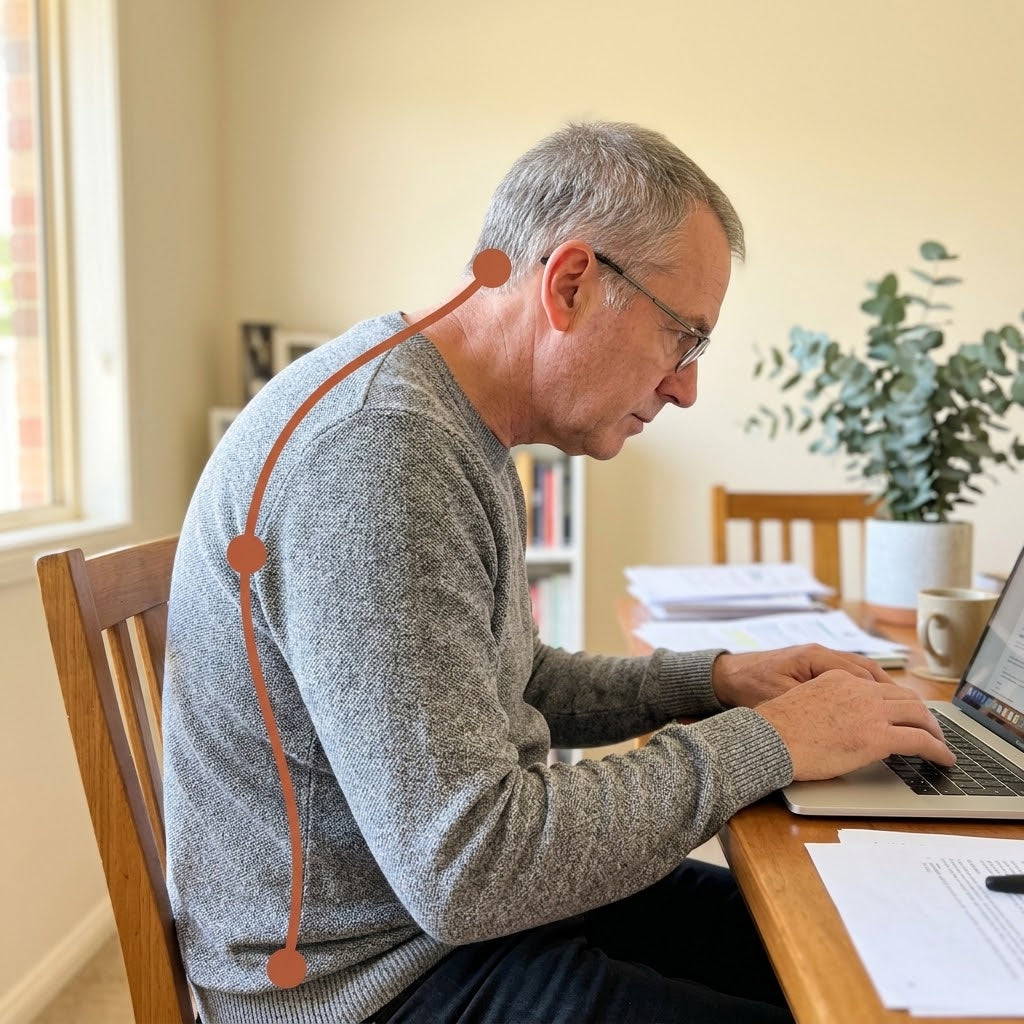
Sign #2: Bad Posture Makes Everything Worse
You’ve noticed the pattern:
After sitting at your desk for hours, worse.
After looking down at your phone, worse.
After a long drive, worse.
After sleeping on the wrong pillow, worse.
Your GP said “stress” or “just tinnitus being tinnitus”.
But the classic tinnitus triggers are:
Loud noise exposure. Caffeine. Alcohol. High sodium. Stress.
Your triggers are:
Neck position. Sitting too long. Looking down. Poor posture.
Every time you look down at your phone, you load up to 27 kilos of pressure onto your neck. Your already-tight muscles at C1 and C2 get tighter.
They compress the vertebral arteries feeding your inner ear even more. Blood flow drops. Your auditory nerves start misfiring. And the ringing gets louder. No white noise machine can open a compressed blood vessel.

Sign #3: Jaw and Head Movements Trigger Instant Spikes
Turning your head quickly to check your blind spot, instant spike.
Tilting your head back, the ringing intensifies.
Looking over your shoulder, the volume jumps.
But here’s what most people miss:
Your jaw does it too.
Clenching your teeth, louder.
Opening your mouth wide at the dentist, louder.
Chewing something tough, the ringing flares.
Classic tinnitus doesn’t respond to jaw position. Somatic tinnitus does. Because your jaw muscles, the masseter and the temporalis, connect directly to the muscles at the base of your skull.
When you clench, those muscles pull on the suboccipital muscles at C1 and C2.
The ones that are already compressing your vertebral arteries.
The tension spreads. The compression increases. Blood flow drops.
Your auditory system reacts instantly.
And the ringing explodes.
Your audiologist tested your hearing at different frequencies. But nobody asked you to move your jaw and see if the ringing changed. Because in their training, tinnitus is about damaged hair cells. Not about muscle tension spreading from your jaw to your neck. When you mentioned movement triggers, there was no explanation. Nobody considered that your muscles were causing everything.

Sign #4: You Have Constant Neck and Jaw Tension
You mention the ache at the base of your skull. The jaw tightness. The shoulder knots that never go away. Your ENT nods and says “that’s just from the stress of living with tinnitus”. But here’s the thing:
Tinnitus patients don’t need neck pain. It’s not part of the condition.
People with somatic tinnitus? Neck and jaw tension are almost always there.
That ache at the base of your skull? Those are your suboccipital muscles, tiny, deep muscles at C1 and C2 that sit directly on your vertebral arteries. When they’re chronically tight, they compress the blood vessels feeding your inner ear. Less oxygen reaches your auditory nerves. They start misfiring. Your brain reads the scrambled signals as sound. Constant sound. Ringing. Buzzing. Hissing. Sound nobody else can hear.
Your neck isn’t reacting to your tinnitus.
Your neck is causing it.

Sign #5: Your Hearing Test Is Normal
You went to the audiologist expecting answers. They ran a full hearing test. Checked every frequency. Looked in your ears. “Your hearing is perfect,” they said. “It’s just tinnitus. There’s no cure. You’ll have to learn to live with it.” You felt dismissed. Like your suffering didn’t count because the test was normal.
But here’s what that normal test actually means: your cochlea is fine. Your hair cells aren’t damaged. Your auditory system works perfectly.
So why the constant ringing? Because the problem isn’t in your ears. It’s in the blood supply to your ears. When the suboccipital muscles at C1 and C2 compress your vertebral arteries, less oxygen reaches your inner ear. Your auditory nerves don’t get the fuel they need. They start sending erratic signals to your brain. Your brain interprets those signals as sound.
A hearing test can’t detect vascular compression. An audiogram can’t see tight muscles choking blood flow. That’s why your test was normal while the ringing screamed in your head.
They were testing the wrong thing.

Most People With Somatic Tinnitus Never Hear the Words
Here’s why:
Most audiologists never examine your neck.
They test your hearing. Check your ear canal. Order a tympanometry.
Hearing test is normal.
Diagnosis: tinnitus. No cure. Learn to live with it.
What they missed:
Your neck was never part of the evaluation.
When people with “idiopathic tinnitus” get the compression at C1 and C2 worked on, manual release of the deep muscles, heat and gentle traction, a lot of them hear the difference within weeks.
But that’s not in the standard tinnitus workup.
There’s no hearing aid to sell for a neck problem. So the neck never gets checked.
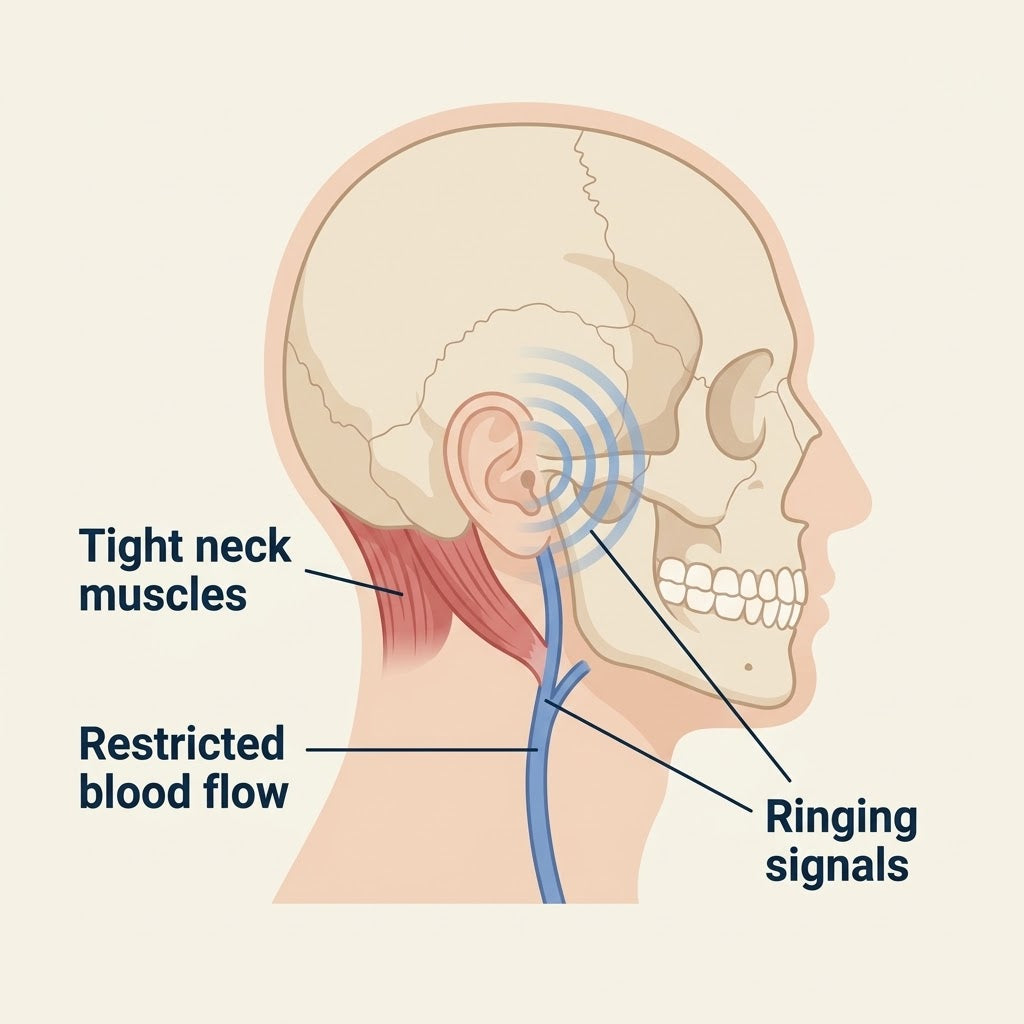
So What IS Somatic Tinnitus?
It’s tinnitus-like symptoms caused by compressed structures at C1 and C2, where your skull meets your spine.
When the deep muscles at the base of your skull become chronically tight, they:
Compress your vertebral arteries, reducing blood flow to your inner ear.
Compress your cervical nerves, causing referred pain and jaw tension.
Disrupt the position signals your brain relies on, so it gets faulty information about where your head is.
This explains:
Why pressing behind your ear changes the volume.
Why bad posture makes it worse.
Why jaw and head movements trigger spikes.
Why you have constant neck and jaw tension.
Why your hearing test is normal.
Why sound therapy doesn’t work.
Your blood vessels need to be decompressed.
Your muscles need to release.
Nothing else gets at the cause.
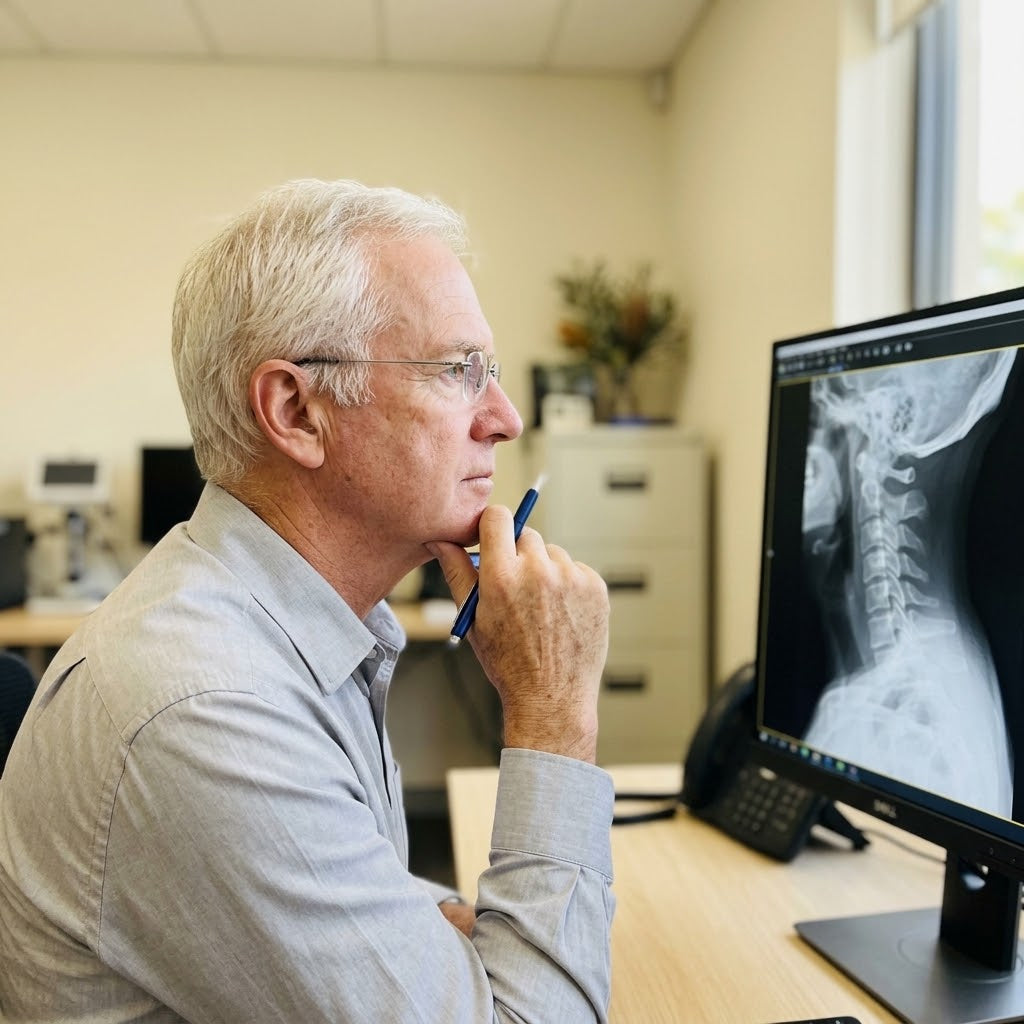
Recent Research Confirms the Neck-Tinnitus Connection
Physiotherapy has a name for this: somatic tinnitus. Ringing driven by the neck and jaw, not by the ear.
The pattern that keeps coming up in people with “idiopathic tinnitus” and persistent neck tension is the same one: tight suboccipital muscles at C1 and C2, compressed vertebral arteries, less blood reaching the inner ear.
And the approach that works on it is the same too: deep heat to open the vessels, electrical muscle stimulation to release the deep muscles, and gentle traction at C1 and C2 to create space.
When the compression eases, the ringing usually eases with it. Volume down. Fewer spikes. Quiet moments back.
But most audiologists never see this side of it. So you keep treating “incurable tinnitus” when the real problem is compressed blood vessels at the base of your skull.
More Than 1,000 Australians Have Reviewed the Mendable Cradle
Meet the device built for exactly this:
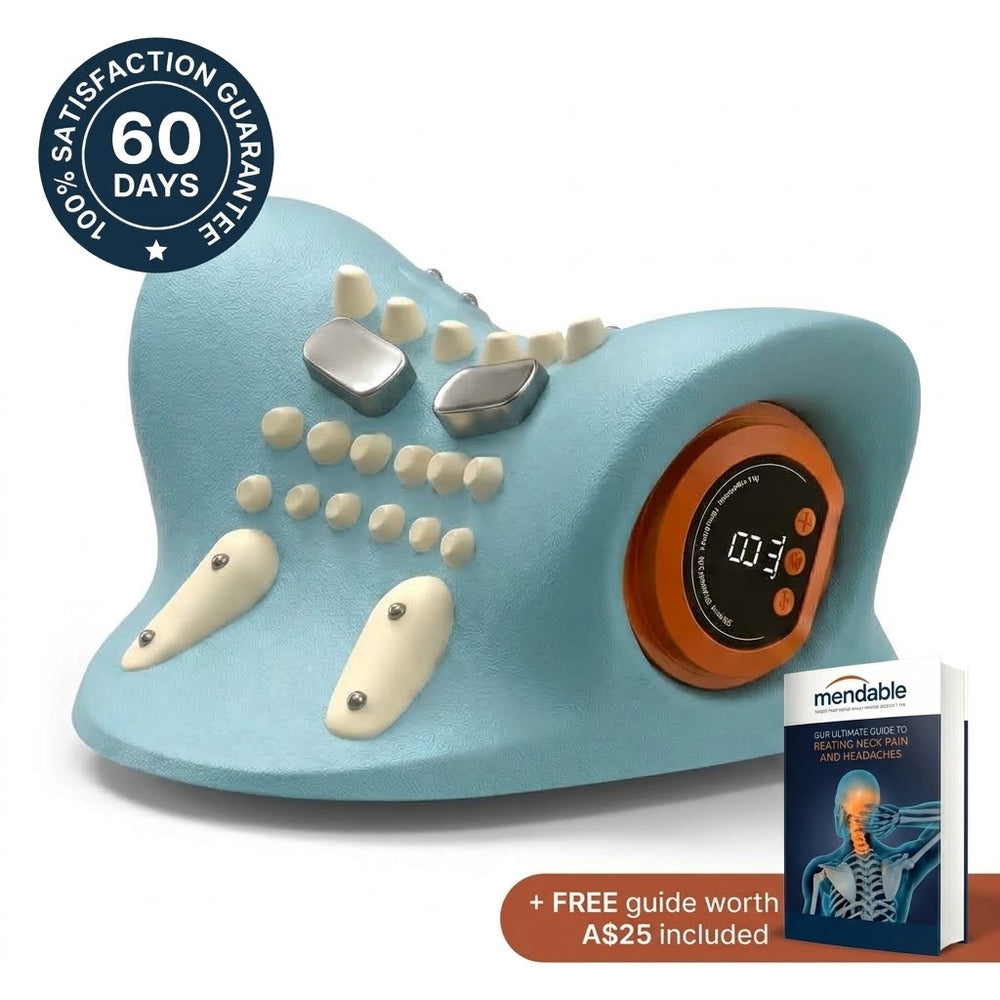
The Mendable Cradle holds your neck at a precisely engineered 26-degree angle, positioned exactly where those deep cervical muscles sit at C1 and C2.
How it works:
Far-infrared heat: relaxes the surface muscles and increases blood flow to oxygen-starved tissue.
EMS technology: reaches the deep suboccipital muscles that massage can’t touch. Makes them contract and release, breaking up chronic tension and taking pressure off the vertebral arteries.
Massage nodes: sit on the trigger points where the compression forms.
The 26-degree position: targets C1 and C2 specifically, not your whole neck. Designed for 2 to 3 millimetres of gentle decompression.
Fifteen minutes a day, lying down.
The result?
Compressed structures decompress.
Blood flows freely to your inner ear again.
Your auditory nerves stop misfiring.
The ringing fades. The spikes stop. The quiet comes back.
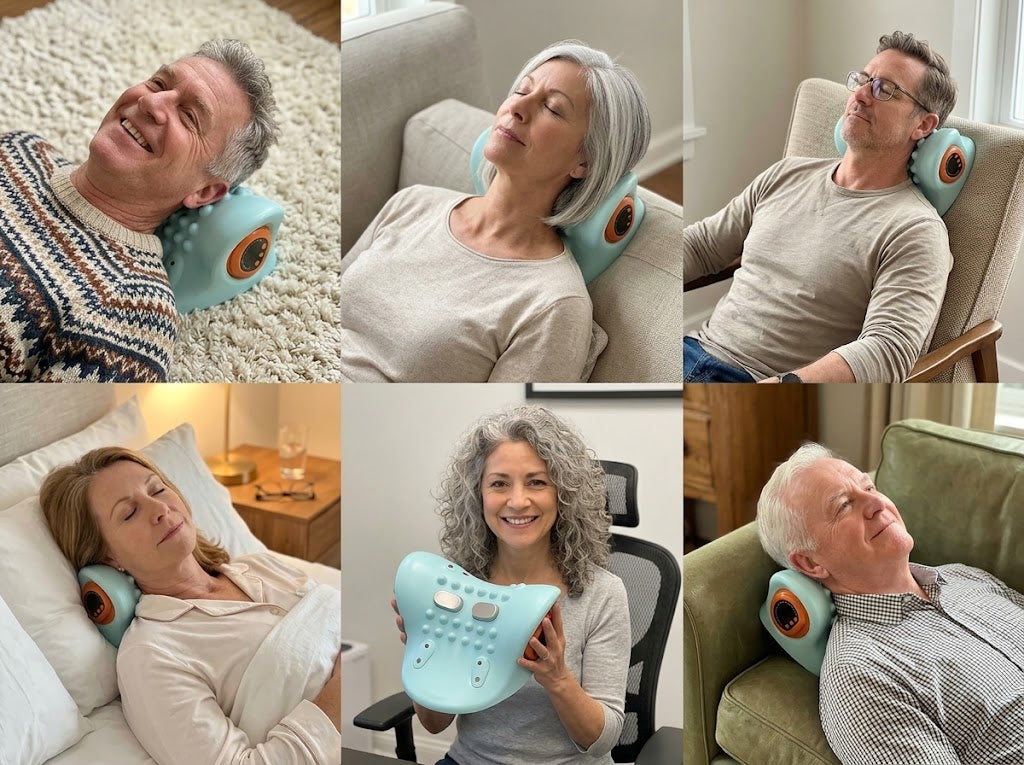
What Others Are Saying
Linda, 54, Hobart TAS:
“I was diagnosed with tinnitus at 51. Sound therapy cost me A$1,400 and did nothing. Two weeks with the Mendable Cradle, the constant ringing dropped from an 8 to a 3. Turns out it was somatic tinnitus the whole time.”
Sharon, 49, Ballarat VIC:
“Five years of white noise machines and sleeping tablets. Still woke up to screaming in my head. Started using the Cradle daily, and within three weeks I had my first silent morning in five years. My audiologist was stunned.”
Kevin, 58, Mackay QLD:
“Normal hearing test. Classic tinnitus diagnosis. Except nothing worked. This device decompressed my neck and my ‘incurable tinnitus’ basically disappeared. I can watch the telly without subtitles now.”
A Message From James, Who Built the Routine
Look, I know what you’re thinking.
“Another device? Another thing that won’t work?”
I worked on necks for 17 years as a remedial massage therapist on the Sunshine Coast before I understood the tinnitus connection.
When I started checking C1 and C2 in clients who’d been told their ringing was “idiopathic”, I found the same pattern over and over:
Chronically tight suboccipital muscles. Compressed vertebral arteries. Reduced blood flow to the inner ear.
When I released that compression by hand, people who’d been living with the ringing for years told me it had eased within weeks.
But I could only see so many people a week. And the release only lasted until their next appointment.
That’s why the Mendable Cradle exists: to deliver the same cervical decompression at home, every day, in 15 minutes.
Why Hasn’t Your Audiologist Told You About This?
Because they don’t know it exists.
Standard tinnitus workups almost never include a neck examination.
When you present with ringing, they run hearing tests, tympanometry, maybe an MRI.
But a neck exam? Checking the muscle tension at C1 and C2?
Rarely part of the protocol.
If they don’t check the neck, they’ll never find it.
LAUNCH OFFER:
As an exclusive offer for readers of this article, the Mendable Cradle is now offering 44% off launch pricing + free Australia-wide shipping to all new customers.
Every order includes the Mendable Neck Care Guide, usually sold separately.
Plus, you have 60 days to test out your Cradle, and if you don’t like it for any reason, email info@getmendable.com for a full refund, no questions asked. You keep the device.
Click the button above to see if the Mendable Cradle is still offering 44% off and free shipping.
4.8
★★★★★
ExcellentREVIEWS
This is how Australians rated the Mendable Cradle.
Based on 1,092 reviews. 96% would recommend it.