


Advertorial🇦🇺 Trending in Australia

Recommended

★★★★★

Rated 4.8/5 | 1,092 Australian reviews

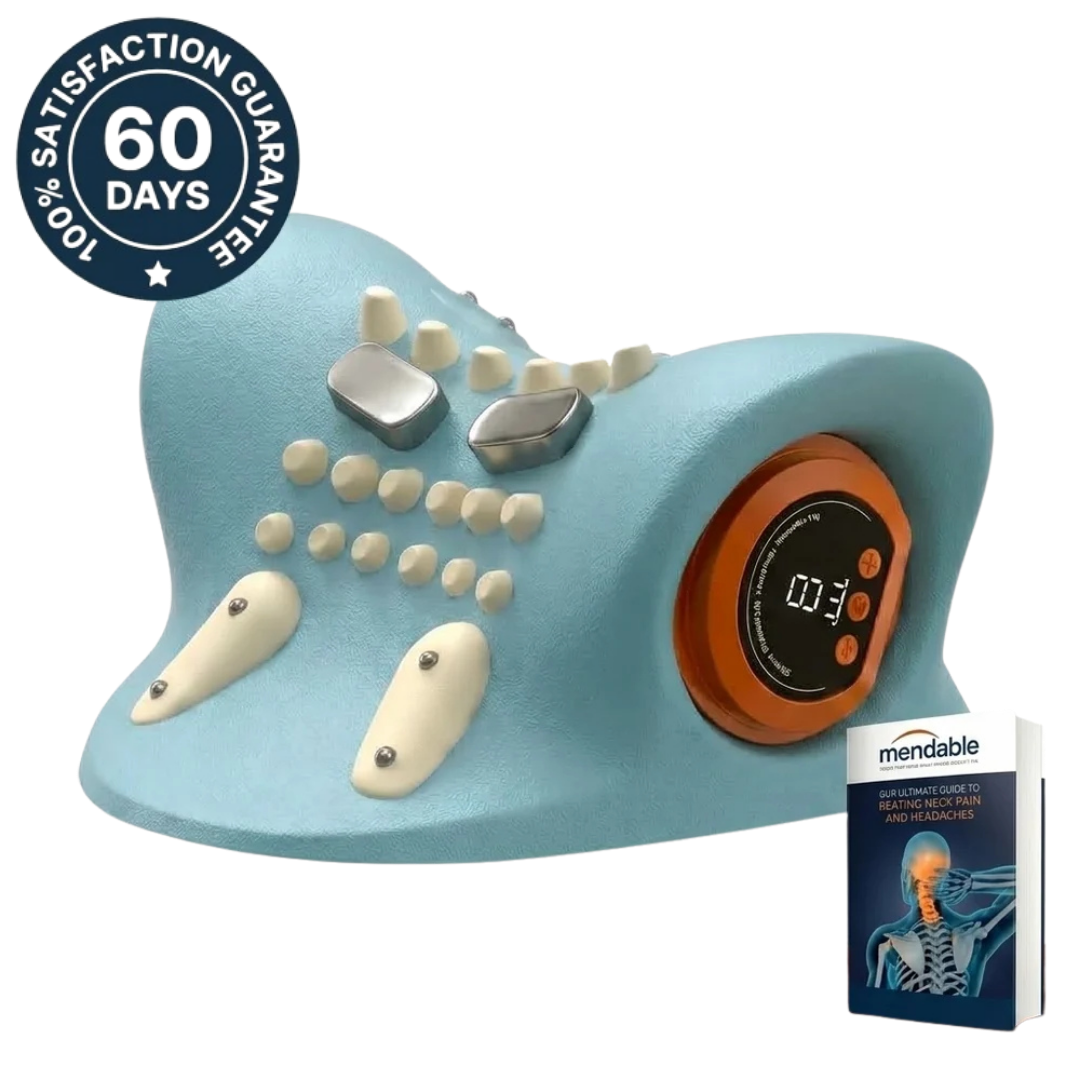
Mendable Cradle

EMS, far-infrared heat, massage and 26° traction in one 15-minute session

Designed for the compression at the top of the neck

60-day money-back promise, keep the device

Free Australia-wide shipping, 2-year warranty

A$139A$249

Check Availability

Doctors Keep Missing This: The 15-Minute Solution Relieving ‘Mystery Symptoms’ in Thousands of Australians

Millions are being misdiagnosed and treated for the wrong conditions

September 2026 — There’s a blind spot in how a whole group of symptoms gets treated in Australia. GPs, ENT specialists and even cardiologists are missing the real cause behind dizziness, light-headedness, brain fog and that low hum of anxiety.

The culprit? Your neck.

James Whitfield spent 17 years as a remedial massage therapist on the Sunshine Coast. He kept seeing the same person walk in: someone who’d been through the GP, the ENT, sometimes the heart specialist. Every test normal. Every time, the same verdict: “it’s probably stress.”

What he found was hard to ignore.

Most of them had been given tablets for anxiety, or sent home to “manage it”. And when he put his hands on the top of their neck, he found the same thing in every one of them: the deep muscles right under the skull, locked solid, pressing on the nerves and vessels that run through there.

Your Neck Controls More Than You Think

Most people don’t realise how much their neck does.

The seven bones in your neck protect the nerve pathways that run your whole body. Those nerves feed your brain constant updates on balance, vision, heart rate, even how clear your head feels.

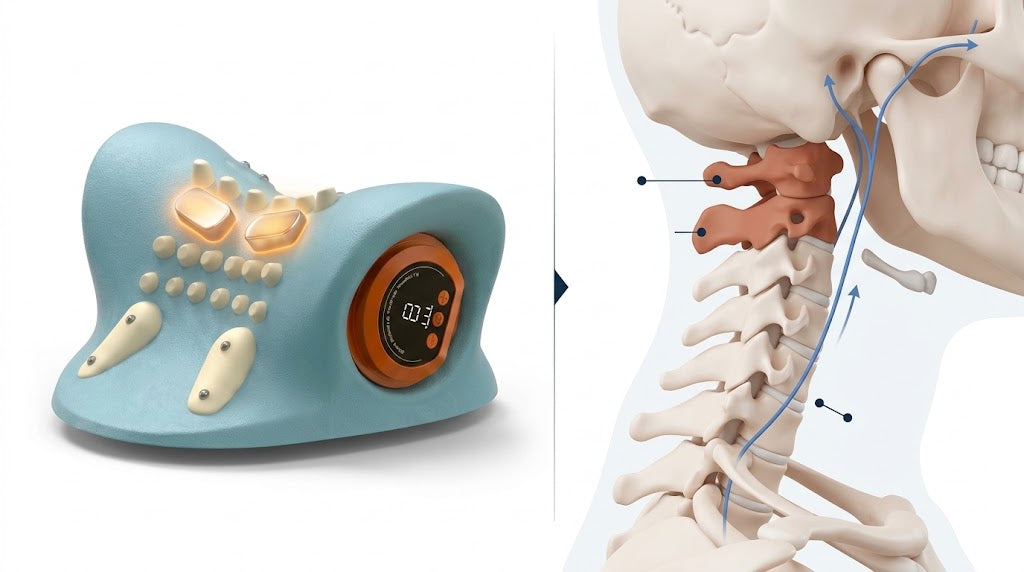
When the deep muscles around the top two bones lock up, from hours bent over a phone, hunched at a desk or propped on the steering wheel, they squeeze the arteries and nerves running through them.

This sets off what therapists call a cascade effect.

First, the squeezed nerves send the wrong signals to your brain. Your vision goes blurry. You feel dizzy. Pressure builds at the base of your skull.

Second, the compression cuts blood flow to the back of your brain. You feel tired and foggy. Anxiety creeps in.

Third, your nervous system starts misfiring. Your heart races. You feel panicky for no reason. You can’t switch off.

Here’s the scary part: none of these symptoms look like a neck problem.

That’s exactly why your doctor keeps missing it.

Why Doctors Get It Wrong

Karen Mitchell, 47, from Penrith NSW, spent two years seeing specialists.

“I saw a cardiologist for my racing heart. An optometrist for my vision problems. A psychologist gave me strategies for the anxiety,” she says.

Not one of them looked at her neck.

“I had every test you can imagine. Brain scan, heart tests, blood work. Everything came back normal. They finally said it was just stress.”

Karen’s story isn’t unusual. In Australia, it’s the norm.

James explains: “When someone has dizziness, they see an ENT. For vision problems, an optometrist.

For the racing heart, a cardiologist. For anxiety, a psychologist. Each one looks at their own patch. Nobody’s job is the top of the neck.”

The result? Thousands of scripts that dull the symptoms without touching the real problem.

Meanwhile, the compression at the top of the neck gets worse.

Why Normal Treatments Don’t Work

Even when someone suspects the neck, the usual options fall short.

Painkillers numb the ache for a few hours. They don’t release the compression.

Massage and stretching feel good for a day. They work on the big surface muscles. The deep ones under the skull, where the real problem lives, stay tight.

Physio can help, and for many people it does. But Medicare covers five subsidised allied-health visits a year, across physio, chiro, osteo and the rest. After that it’s A$90 to A$150 a session, out of your own pocket, and you’re waiting for the next appointment to feel human again.

Chiro is a personal call. Plenty of Australians swear by it. Plenty of others will tell you about the money they wasted.

Specialist referral means public waiting lists that run into next year, or private fees that run into the thousands.

Surgery is the last resort, and months of recovery.

This is what pushed James to look for something better.

The Four-Part Solution That Actually Works

After two years working with movement therapists and pain rehab researchers, James landed on something simple: four things, done together, worked far better than any one of them alone.

Part 1: Electrical Muscle Stimulation (EMS)

Gentle pulses, 120 a minute, sent into the deep neck muscles that massage and stretching can’t reach. The muscles contract and release on their own. For most people, it’s the first time those muscles have fired properly in months.

🔥Part 2: Far-Infrared Heat

Heat that reaches several centimetres below the surface, helping blood vessels open. Fresh, oxygen-rich blood gets back into tissue that’s been starved. When blood flows freely again, the foggy, off-balance feeling starts to ease.

💆Part 3: Targeted Massage

Unlike surface massage, massage nodes sit on the exact trigger points where the compression forms. Knots you didn’t know you had start to let go, and the nerves stop sending mixed signals.

📐Part 4: Cervical Traction at 26°

This is the key. At 26° of gentle extension, your vertebrae get space, designed for 2 to 3 millimetres of decompression. Enough room for squeezed arteries and trapped nerves to settle. No cracking. No sudden force.

Together, these four don’t just cover up the symptoms. They work on the compression itself.

But How Can the Same Four-Part Routine Cost Less Than One Month of Appointments?

The routine worked. Patients felt a real difference within a couple of weeks.

But there was a problem: cost.

Getting all four parts meant three or four appointments a week, at different places. Physio, remedial massage, chiro. None of it covered once your Medicare visits were gone.

Add it up over a year and the average Australian chasing this pays more than A$5,400 in physio, chiro, massage, patches and gap fees.

“We had something that worked,” James says. “But only people who could afford to keep booking could get it.”

So James and the Mendable team spent two years and dozens of prototypes putting all four parts into one device you lie on at home.

The Mendable Cradle delivers the same four parts at the same time. Sold direct through Mendable’s Australian website, shipped from their Australian fulfilment partner.

Launch pricing is A$139. Regular price is A$249.

From A$5,400 a Year in Appointments to Your Living Room

The Mendable Cradle puts James’s four-part routine into one unit:

EMS that reaches the deep muscles at the top of your neck, the ones no massage gets to.
Far-infrared heat set to reach several centimetres below the surface, so blood gets back to starved tissue.
Massage nodes positioned on the trigger points where compression forms.
Cervical traction at 26°, designed for 2 to 3 millimetres of gentle decompression, without anyone cracking your neck.

You lie on it for 15 minutes a day.

Mendable asked 487 Australians with chronic neck pain of six months or more to use it daily for 30 days. Every one of them had already failed at least three other treatments.

After 30 days:

89%

reported significant improvement, 3 or more points on a 10-point pain scale

84%

had more range of motion in the neck

79%

stopped reaching for daily pain relief

92%

reported better sleep

At the 90-day follow-up, 86% were still reporting consistent relief, with nothing beyond the daily 15-minute routine.

The survey measured neck pain, movement, medication and sleep. It did not measure dizziness. What it shows is that the deep compression at the top of the neck, the thing this article is about, does respond to a routine done at home.

Real People, Real Relief

Janine Walsh, 51, from Geelong VIC, suffered from mystery symptoms for three years.

“I had constant pressure in my head, like my brain was in a vice. My hands would go numb while driving. I’d get dizzy standing up. Doctors tested me for everything, MS, brain tumours, ear problems. Nothing showed up.”

A friend told her about the Mendable Cradle. She didn’t believe it would work, but she was desperate.

“Within the first week, the head pressure eased. By week two, the hand numbness was gone. After a month, I felt like myself again for the first time in years.”

Rob Bennett, 56, from Townsville QLD, dealt with daily heart palpitations and panic attacks.

“I thought I was having heart attacks. I went to emergency four times. They’d run tests and send me home saying my heart was fine. The anxiety was ruining my life.”

A physio finally checked his neck and found the top of it locked solid.

“I started using the Cradle twice a day. The palpitations eased within days. The panic feelings stopped after about ten days. I couldn’t believe something so simple sorted out what the doctors couldn’t.”

These aren’t rare cases. More than 1,000 Australians have reviewed the Mendable Cradle, and 96% say they’d recommend it.

Why This Works When Everything Else Failed

The difference is simple: depth and completeness.

Tablets mask the symptoms. Basic massage only reaches the surface muscles.

Stretching doesn’t address the compression underneath.

The Cradle’s four-part routine works on the problem at every level:

The EMS wakes the deep muscles that have gone dormant, so the top of your neck can hold its position again.
The heat opens the blood vessels, so more blood reaches the back of your brain. The foggy, off-balance feeling eases.
The massage releases the trigger points that have been sending your nervous system false alarms.
The traction at 26° gives your vertebrae the space they haven’t had in months, taking pressure off the arteries and nerves.

Together, they don’t hide the symptoms. They work on the compression itself.

The same thing James spent two years doing by hand, done in 15 minutes, on your couch.

What You’re Probably Spending Now

Think about what you’re already paying:

Physio: A$110 a session, once your five Medicare visits are gone

Chiro: A$95 a visit, usually twice a month

Remedial massage: A$100 a session

Patches and anti-inflammatories: around A$480 a year

GP gap fees: A$39 a visit

Days off work from feeling terrible: priceless

Most people spend more than A$5,400 a year treating symptoms that never improve, because nobody is addressing the compression at the top of the neck.

The Mendable Cradle is A$139 at launch pricing. Regular price A$249.

One payment. Use it whenever you need it.

That’s less than one month of the appointment cycle.

The 60-Day Money-Back Promise

Here’s what makes this completely risk-free.

Use the Mendable Cradle for 60 full days.

If you don’t notice your neck easing within the first week, better movement within three, and lasting relief by day 60, email info@getmendable.com for a full refund.

No questions asked. You don’t need to send the device back. Keep it.

Mendable can make that promise because their return rate sits around 2%. Ninety-eight out of a hundred people who try it, keep it.

This is in addition to your rights under Australian Consumer Law.

What Happens If You Don’t Act

Here’s the thing about deep neck compression.

It doesn’t sort itself out.

Muscles that have shut down don’t switch back on because you waited.

The dizzy spells get closer together. What used to happen once a fortnight starts happening most weeks.

The fog gets thicker. Forgetting the word. Losing your place mid-sentence.

The worry settles in. Your nervous system keeps getting false alarms from your neck, and it stops knowing how to switch off.

The ache at the base of your skull spreads. Into headaches. Into the shoulders. Down the arm.

And the care pathway keeps doing what it does. Another script. Another referral. Another six-month wait to be told everything looks normal.

James is blunt about it: “The longer those deep muscles stay switched off, the more ground there is to make up. The people who do best are the ones who start before the neck has been locked for years.”

Your Two Choices

Choice 1: Keep taking the tablets. Keep seeing specialists who look at everything except the top of your neck. Keep hoping it settles on its own.

(It won’t, because they were never looking at the cause.)

Choice 2: Work on the actual source with the same four-part routine that’s helping thousands of Australians ease their ‘mystery symptoms’ in 15 minutes a day, without the appointment cycle.

Karen Mitchell, who spent two years being misdiagnosed, says it best:

“I spent over A$8,000 on specialists, tests and medications that didn’t work.

The Mendable Cradle cost me A$139 and gave me my life back. I only wish I’d found it sooner.”

Click the button below to check if it’s still in stock.

If it is, your launch pricing is applied automatically.

★★★★★

Click the button below to check if it’s still in stock.

If it is, launch pricing will be applied automatically.

Apply Launch Pricing & Check Availability